Keeping your kitchen knives sharp, safe, and long-lasting doesn’t require professional-chef expertise—just the right habits. Yet many home cooks unknowingly damage their knives through everyday misuse. Below are five of the most common knife-care mistakes and simple ways to avoid them.
1. Using the Wrong Cutting Surface
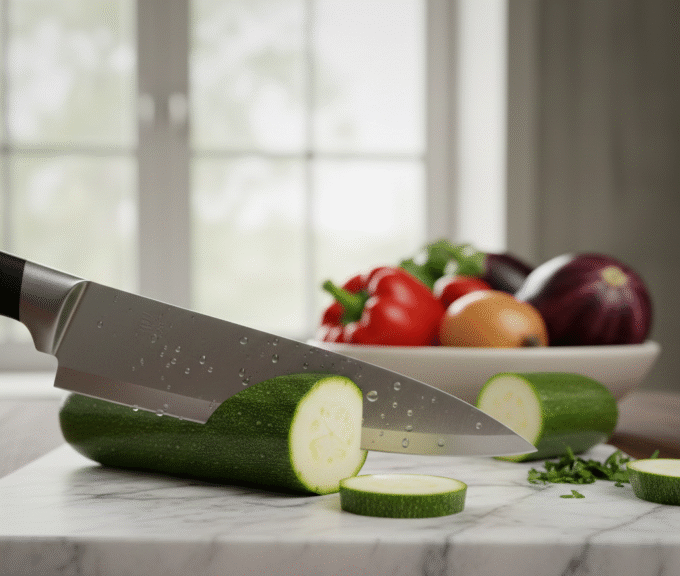
The mistake: Cutting on glass, marble, granite, or ceramic boards. These ultra-hard surfaces quickly dull blades and can even cause micro-chips.
How to avoid it:
Use wooden or high-quality plastic cutting boards. End-grain wooden boards are especially gentle on edges, helping your knives stay sharper longer.

2. Putting Knives in the Dishwasher
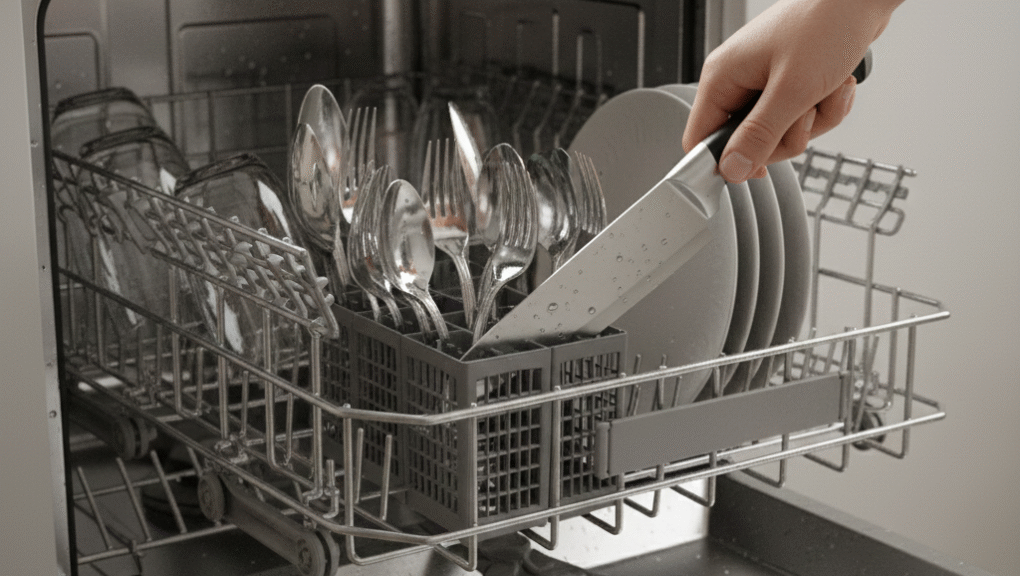
The mistake: Dishwashers expose knives to harsh detergents, water pressure, and banging against other utensils—all of which can corrode or dull blades.
How to avoid it:
Hand-wash your knives immediately after use with mild soap and warm water. Dry them thoroughly to prevent rust or staining, especially if you use high-carbon steel.
3. Improper Storage
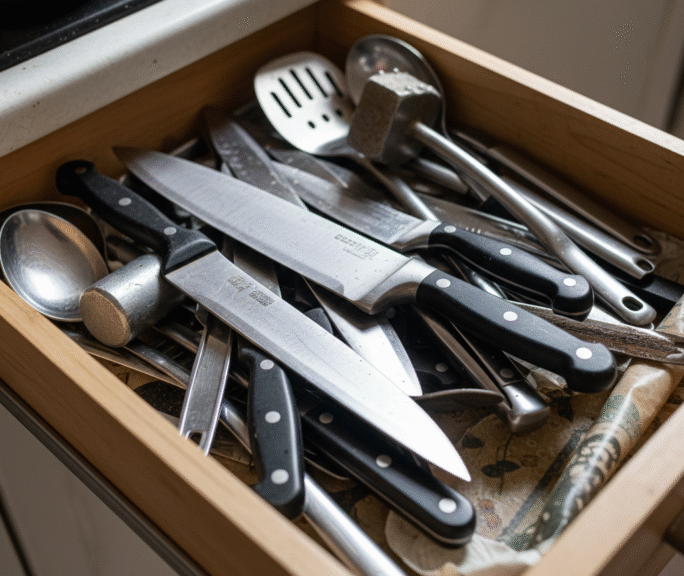
The mistake: Tossing knives loosely in a drawer where blades rub against other tools or get knocked around.
How to avoid it:
Store knives in a dedicated knife block, magnetic strip, or protective blade guards. Proper storage prevents unnecessary dulling and keeps your hands safe when reaching into drawers.
4. Skipping Regular Honing
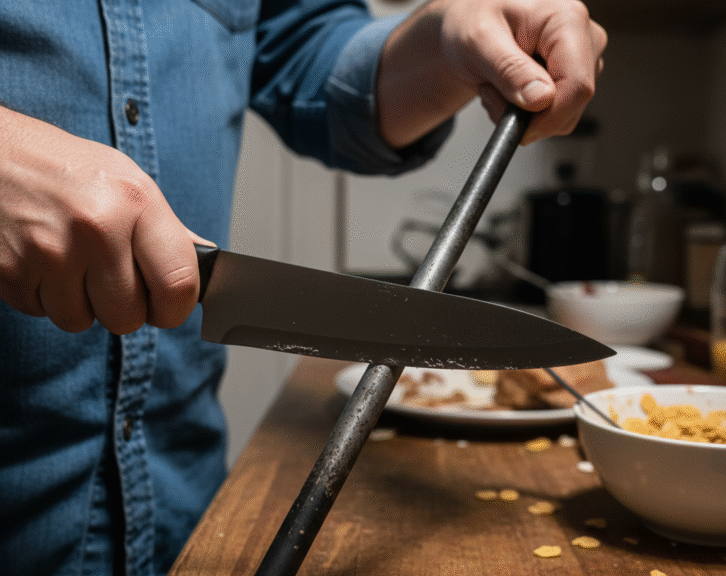
The mistake: Waiting until your knife is completely dull before sharpening. Many cooks assume a knife is “fine” until it struggles—but dull blades slip more easily and are more dangerous.
How to avoid it:
Hone your knife with a honing rod every few uses to keep the edge aligned. Then sharpen it with a whetstone or professional sharpening service every few months, depending on usage.
5. Using Knives for the Wrong Tasks
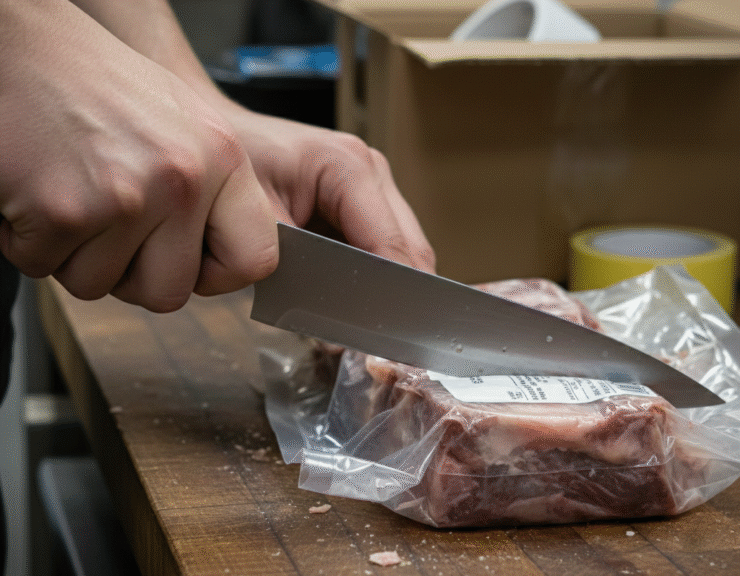
The mistake: Using a chef’s knife to open packages, pry open jars, or cut bones. This can damage the edge or even snap the blade.
How to avoid it:
Use the right tool for the job: kitchen shears for packaging, a sturdy cleaver for bones, and a paring knife for small precision tasks. Your chef’s knife should handle slicing, chopping, and mincing—not household chores.